You do not improve by training as hard as possible. You improve by training hard enough, often enough, for long enough.
That is true not only for elite athletes, but for any runner who wants to improve without breaking down. Whether you are chasing a first marathon, a faster 10K, or simply trying to train well year after year, the same governing principles apply.
The Norwegian Method has become a global label. Many runners copy what they see: the workouts, the threshold sessions, the weekly structure. But copying the sessions is not the same as understanding what makes them work.
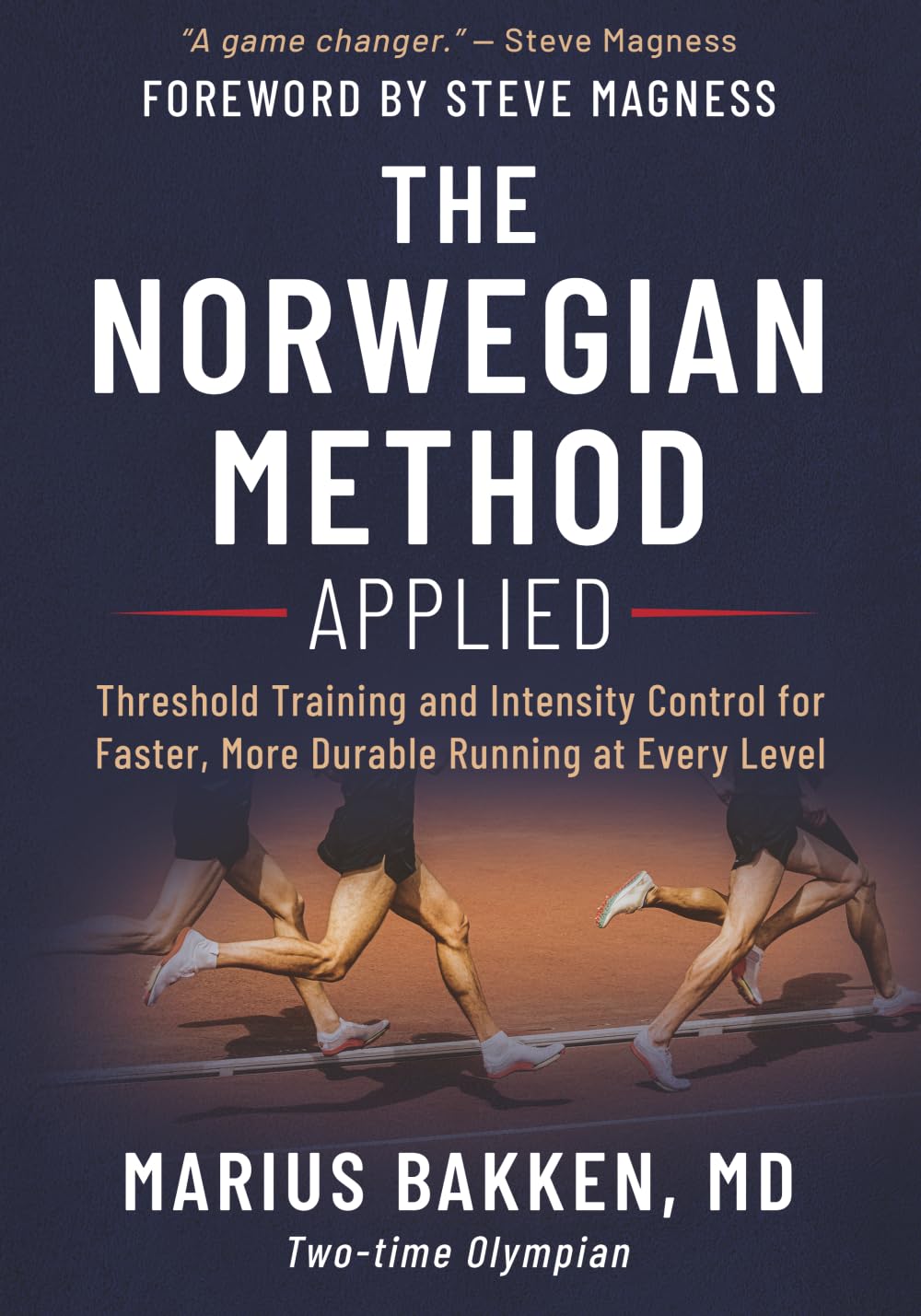
The Norwegian Method Applied explains the principles behind the method and shows how to apply them to your own training, regardless of your level.
The framework was developed from the mid-1990s onward, before the term “Norwegian Method” existed. Over decades of experimentation and more than 5,500 lactate tests, Marius Bakken, a practicing physician and former 13:06 5,000-meter runner, shaped, structured, and refined the threshold-based framework that later came to be known as the Norwegian Method. It rested on one central idea: intensity must be precise enough to be tolerated and repeated. Precision creates continuity. Continuity creates the volume of high-quality training that actually improves performance.
The method has since spread to the highest levels of endurance sport, from track world records to world-championship triathlon and road running.
But its principles are not reserved for the elite. They work just as well for the runner targeting a first marathon, a faster 10... See more
You do not improve by training as hard as possible. You improve by training hard enough, often enough, for long enough.
That is true not only for elite athletes, but for any runner who wants to improve without breaking down. Whether you are chasing a first marathon, a faster 10K, or simply trying to train well year after year, the same governing principles apply.
The Norwegian Method has become a global label. Many runners copy what they see: the workouts, the threshold sessions, the weekly structure. But copying the sessions is not the same as understanding what makes them work.
The Norwegian Method Applied explains the principles behind the method and shows how to apply them to your own training, regardless of your level.
The framework was developed from the mid-1990s onward, before the term “Norwegian Method” existed. Over decades of experimentation and more than 5,500 lactate tests, Marius Bakken, a practicing physician and former 13:06 5,000-meter runner, shaped, structured, and refined the threshold-based framework that later came to be known as the Norwegian Method. It rested on one central idea: intensity must be precise enough to be tolerated and repeated. Precision creates continuity. Continuity creates the volume of high-quality training that actually improves performance.
The method has since spread to the highest levels of endurance sport, from track world records to world-championship triathlon and road running.
But its principles are not reserved for the elite. They work just as well for the runner targeting a first marathon, a faster 10K, or simply wants to stay injury-free over time.
“It’s rare that you get a training book that offers something truly new. Throughout his career, Marius has been at the forefront of figuring out what works and pushing our understanding of training forward. This book is the fullest expression of it. I promise you’ll walk away with the same feeling I did: this is not only something new, it’s a game changer.”